


 Tel:
 Email:
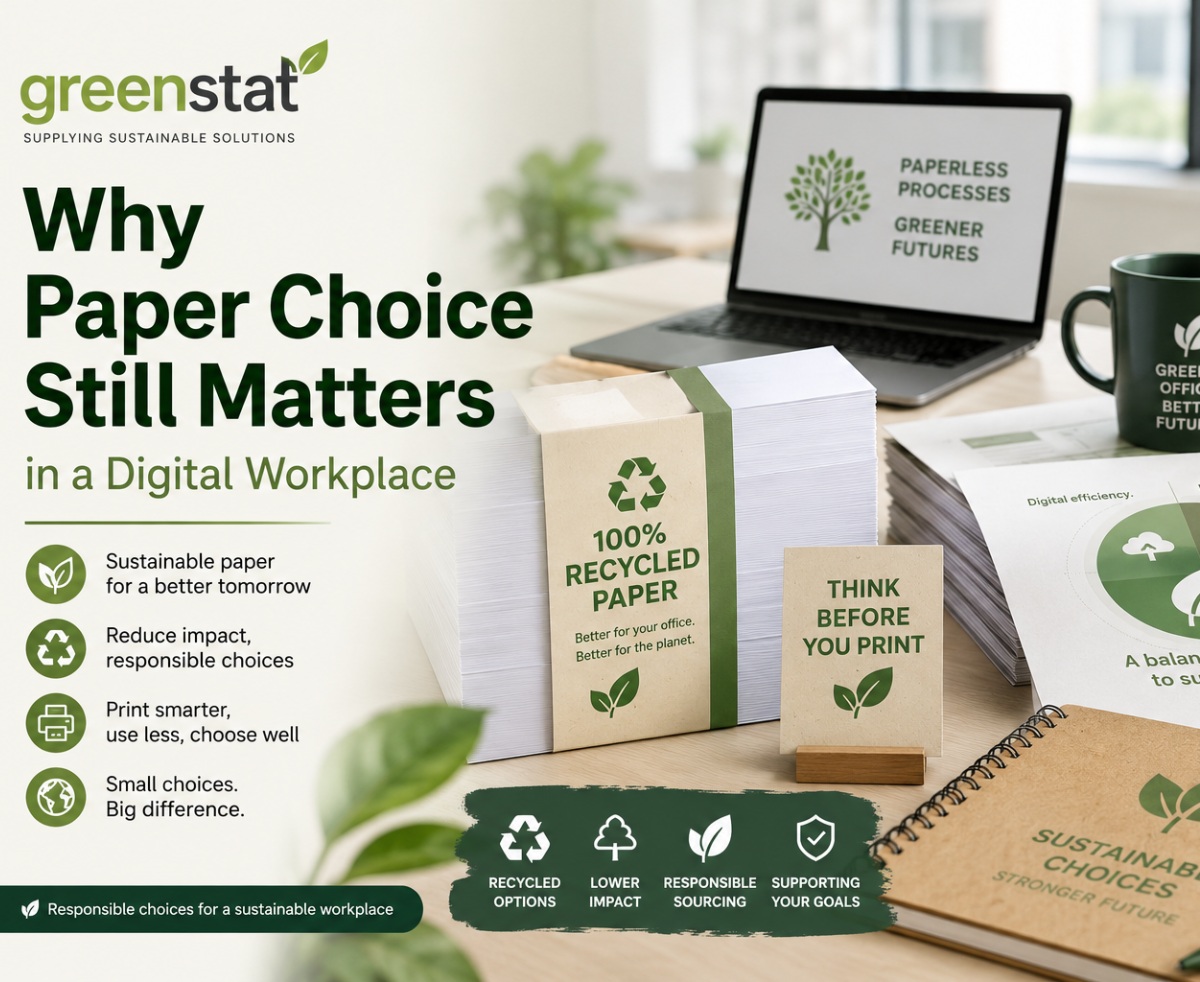
At Greenstat, we understand that modern workplaces are increasingly digital, with organisations relying on cloud-based systems, online communication, and paperless processes. However, despite this shift, paper still plays a role in many day-to-day business activities.
From internal documents to client-facing materials, the type of paper chosen continues to have an impact on environmental responsibility, brand perception, and overall workplace sustainability. This is why paper choice still matters, even in a digital-first environment.
The Reality of Paper in a Digital Workplace
While many organisations have reduced their reliance on paper, it has not disappeared entirely. Businesses still use printed documents for meetings, presentations, compliance records, and communication where a physical format is preferred or required.
As highlighted by Greenstat’s focus on supplying environmentally conscious office materials, paper remains a part of the modern office landscape, even as companies move towards lower-impact operations and more sustainable supply chains.
This means that when paper is used, the choice of material becomes increasingly important.
Why Paper Choice Still Has an Environmental Impact
Even in a digital workplace, the paper that is used contributes to overall environmental impact. Different types of paper have different production processes, resource requirements, and end-of-life outcomes.
At Greenstat, we specialise in offering products that are selected for their environmental advantages over standard office materials. This includes paper made from recycled or alternative fibres, as well as options designed to support lower-impact office use.
Choosing more sustainable paper options can help businesses reduce their environmental footprint, even when digital systems are in place.
Supporting a More Sustainable Office Culture
A digital workplace does not automatically mean a sustainable one. Sustainability depends on the decisions made across all areas of office operations, including procurement and material use.
Paper choice forms part of a wider commitment to reducing environmental impact. By selecting responsibly sourced or recycled paper, organisations can support a culture that prioritises sustainability alongside efficiency.
Greenstat’s approach is built around helping customers move towards a low-impact office environment by providing access to environmentally preferable products.
The Role of Responsible Procurement
Procurement decisions play an important role in shaping workplace sustainability. Even in digital-first organisations, there are still occasions where paper is required, and selecting the right supplier and product can make a difference.
Greenstat supports organisations looking to make more informed purchasing decisions by offering a range of paper and office materials designed with environmental considerations in mind.
This helps businesses align their physical supply choices with their broader sustainability goals.
Balancing Digital Efficiency with Physical Needs
Digital systems have significantly improved efficiency in the workplace, reducing the need for printed documents in many areas. However, there are still situations where physical copies are necessary for clarity, accessibility, or practical use.
The key is not necessarily to eliminate paper entirely, but to use it more consciously. This includes considering when printing is required and ensuring that when it is used, it reflects responsible environmental choices.
Paper selection therefore becomes part of a balanced approach between digital efficiency and physical practicality.
How Paper Choice Supports Corporate Responsibility
Many organisations now have sustainability targets or environmental commitments. Paper usage, although reduced in many cases, still forms part of overall resource consumption.
Choosing environmentally preferable paper supports these commitments and demonstrates a consistent approach to sustainability across all business operations.
At Greenstat, we work with organisations that want to align their procurement decisions with their environmental values, helping to support more responsible office practices.
A Broader View of the Green Office
Paper choice is just one element of a wider approach to creating a more sustainable office. A green office considers materials, waste, procurement, and everyday operational habits as part of a connected system.
Greenstat provides a range of environmentally conscious office supplies designed to support this approach, helping organisations reduce their impact without compromising on functionality or quality.
This broader view recognises that sustainability is not defined by a single action, but by consistent decision-making across the workplace.
Conclusion
Even in a highly digital workplace, paper still has a role to play. The important difference today is not whether paper is used, but how it is chosen and the impact those choices have on the environment.
At Greenstat, we understand that sustainable paper selection remains relevant to modern organisations. By choosing environmentally responsible options, businesses can continue to reduce their impact while maintaining the practical benefits of printed materials where needed.
Paper choice still matters because every decision contributes to a more sustainable and responsible way of working.
