0 GBP 0.00
products in your basketto quote Checkout
Ooops no items were found.
Try something else.
Ok
Loading…

What Is Scope 3 Carbon Reporting And Why Does It Matter For SMEs?

Carbon reporting has become an increasingly important topic for businesses of all sizes. While many organisations are familiar with measuring emissions from their own operations and energy consumption, there is growing recognition that a significant proportion of a company's environmental impact often exists beyond its direct control.

This is where Scope 3 carbon reporting comes into focus.

For small and medium-sized enterprises (SMEs), understanding Scope 3 emissions is becoming increasingly important. While some businesses may not yet be required to report these emissions formally, growing expectations from customers, supply chains, investors, and larger organisations mean that Scope 3 reporting is becoming an increasingly valuable part of sustainability management.

At Greenstat, we help businesses understand and navigate the evolving sustainability landscape. As reporting expectations continue to develop, understanding Scope 3 emissions can help SMEs prepare for future requirements while gaining valuable insights into their wider environmental impact.

Understanding The Three Emissions Scopes

Carbon reporting is commonly structured around the Greenhouse Gas Protocol, which divides emissions into three categories known as Scope 1, Scope 2, and Scope 3.

Scope 1 emissions are direct emissions from sources owned or controlled by the organisation, such as company vehicles or on-site fuel use. Scope 2 emissions are indirect emissions associated with purchased electricity, heating, or cooling.

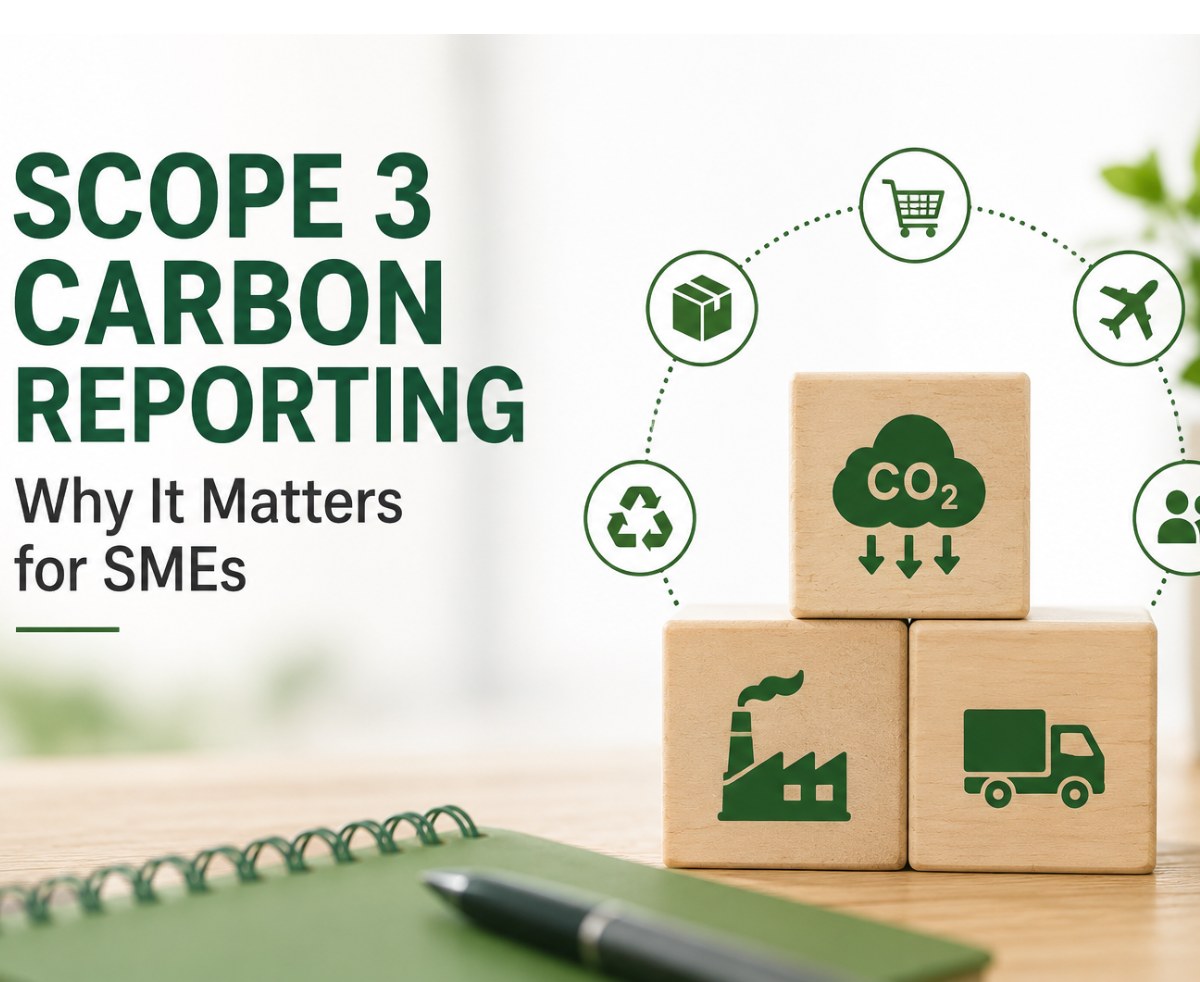
Scope 3 emissions cover a much broader range of indirect emissions that occur throughout a company's value chain, both upstream and downstream of its operations. These can include emissions associated with purchased goods and services, business travel, waste, transportation, employee commuting, and many other activities connected to the business.

What Makes Scope 3 Different?

Scope 3 is often the most complex category to measure because the emissions occur outside an organisation's direct operations.

Unlike Scope 1 and Scope 2 emissions, which are generally easier to track through fuel consumption and energy bills, Scope 3 emissions involve activities across suppliers, partners, customers, and other parts of the value chain.

This complexity means that businesses frequently need to gather information from multiple sources and work closely with suppliers and stakeholders to develop a clearer understanding of their overall carbon footprint.

Despite these challenges, Scope 3 reporting has become increasingly important because it often represents the largest share of a company's total emissions. For many organisations, the majority of their environmental impact exists within their value chain rather than their direct operations.

Why Scope 3 Matters For SMEs

Some SME owners assume that carbon reporting is primarily a concern for large corporations. However, this is changing rapidly.

Many larger organisations are now measuring and reporting their own Scope 3 emissions. In order to do this accurately, they often need emissions data from suppliers throughout their value chain. As a result, SMEs are increasingly being asked to provide carbon information to customers, procurement teams, and supply chain partners.

Businesses that can provide reliable emissions information may find themselves better positioned to meet supplier requirements and support customer sustainability objectives.

Supply Chain Expectations Are Increasing

One of the biggest drivers of Scope 3 reporting is supply chain transparency.

Large organisations are under growing pressure to understand the emissions associated with their products, services, and suppliers. This means they often require emissions data from businesses they work with, including SMEs.

For smaller businesses, having a clear understanding of carbon emissions can therefore become an important competitive advantage. Companies that are prepared to provide accurate sustainability information may find it easier to respond to customer requests and procurement requirements.

As sustainability becomes a greater consideration within purchasing decisions, transparency is increasingly valued across supply chains.

Supporting Future Business Opportunities

Many tenders, contracts, and procurement processes now include sustainability-related questions.

Businesses are increasingly being asked about their environmental performance, carbon reduction initiatives, and reporting capabilities. Understanding Scope 3 emissions can help SMEs respond more effectively to these requirements and demonstrate their commitment to sustainability.

This can be particularly valuable when working with larger organisations that have their own sustainability targets and reporting obligations.

Being prepared with reliable emissions information can help businesses strengthen their position when pursuing new opportunities.

Improving Visibility Across The Business

Scope 3 reporting is not simply about compliance or external reporting.

The process of measuring value chain emissions can provide valuable insight into how a business operates. By understanding where emissions occur, organisations can identify areas for improvement and gain a clearer picture of their wider environmental impact.

This visibility can support more informed decision-making and help businesses develop practical sustainability strategies based on real data rather than assumptions.

For many organisations, the reporting process itself becomes a useful management tool.

Identifying Carbon Hotspots

One of the key benefits of Scope 3 reporting is the ability to identify emissions hotspots.

Not all activities contribute equally to a company's carbon footprint. By measuring emissions across the value chain, businesses can better understand which areas have the greatest environmental impact.

This information helps organisations focus their efforts where they can achieve the greatest results.

Rather than attempting to address every possible source of emissions at once, businesses can prioritise the areas that matter most.

Preparing For Future Reporting Requirements

Sustainability reporting continues to evolve, both in the UK and internationally.

While reporting requirements vary depending on company size, sector, and location, the overall direction of travel is clear. Businesses are increasingly expected to understand and communicate their environmental impact.

SMEs that begin developing carbon reporting capabilities today are often better prepared for future expectations and changing stakeholder demands.

Early preparation can also help avoid the challenges associated with gathering emissions data under tight deadlines if reporting requirements expand in the future.

Challenges Of Scope 3 Reporting

It is important to recognise that Scope 3 reporting is often more challenging than measuring direct emissions.

Data availability can be limited, supplier information may vary in quality, and some emissions categories can be difficult to calculate accurately. Many businesses initially rely on estimates and industry-average data while developing more detailed reporting processes over time.

The key is often to start with the most significant areas of impact and improve reporting quality progressively rather than waiting for perfect data before taking action.

Many organisations find that their reporting processes become more robust as supplier engagement and data collection improve.

Why SMEs Should Start Now

Even if formal reporting requirements do not currently apply, there are strong reasons for SMEs to begin understanding their Scope 3 emissions.

Customers are asking more questions about sustainability. Supply chain expectations continue to increase. Procurement processes are becoming more focused on environmental performance. Investors and stakeholders are seeking greater transparency.

Businesses that begin building knowledge and capability today are often better positioned to respond to these changes in the future.

Scope 3 reporting is increasingly becoming part of doing business in a sustainability-focused economy.

Conclusion

Scope 3 carbon reporting focuses on the indirect emissions that occur throughout a company's value chain. While these emissions can be more challenging to measure than direct operational emissions, they often represent the largest component of an organisation's overall carbon footprint.

For SMEs, understanding Scope 3 emissions is becoming increasingly important as customer expectations, supply chain requirements, and sustainability reporting standards continue to evolve. Beyond compliance, Scope 3 reporting can provide valuable insights that support better decision-making and long-term sustainability planning.

At Greenstat, we help businesses understand their environmental impact and develop practical approaches to sustainability reporting. By taking steps to understand Scope 3 emissions today, SMEs can build stronger foundations for future growth, resilience, and sustainability.

SEARCH ×