


 Tel:
 Email:
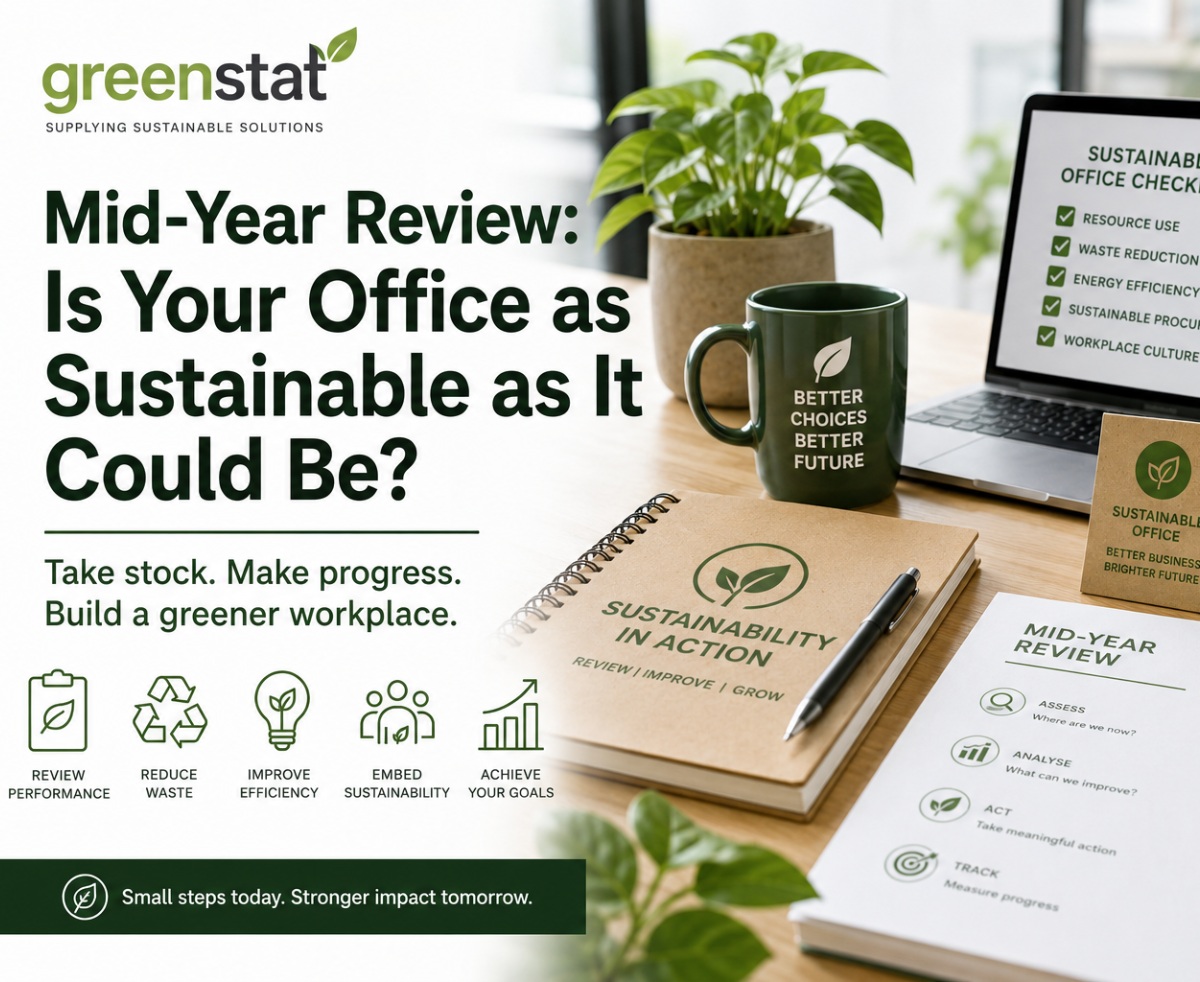
At Greenstat, we understand that sustainability is no longer a “nice to have” for modern businesses, but an important part of how organisations operate, manage resources, and plan for the future. A mid-year review is a valuable opportunity to assess whether your office is performing as efficiently and sustainably as it could be, and to identify practical ways to improve.
As businesses across the UK continue to place greater focus on environmental responsibility, reviewing workplace practices halfway through the year can help highlight areas where waste can be reduced, processes improved, and resources used more effectively.
Why a Mid-Year Sustainability Review Matters
A mid-year review provides a natural checkpoint to evaluate how your office is performing against sustainability goals set earlier in the year. It allows organisations to step back and consider whether their current practices are aligned with broader environmental objectives.
Sustainability in the workplace is closely linked to efficiency, resource use, and operational awareness. By taking time to assess performance, businesses can identify areas where improvements may reduce unnecessary consumption and support a more responsible approach to day-to-day operations.
At Greenstat, we recognise that sustainability works best when it is practical, measurable, and embedded into everyday business activity.
Reviewing Office Resource Use
One of the key areas to consider during a mid-year review is how office resources are being used. This includes materials, energy consumption, and general operational habits across the workplace.
Understanding where resources are being used efficiently, and where there may be unnecessary waste, is an important step in improving overall sustainability performance. Many businesses find that small adjustments in behaviour and process can lead to meaningful improvements over time.
A structured review helps highlight these opportunities clearly, making it easier to prioritise action where it is most needed.
Reducing Waste in the Workplace
Waste reduction is a central part of any sustainability strategy. Offices generate waste in many forms, from everyday consumables to larger operational outputs.
A mid-year review provides an opportunity to assess how waste is being managed and whether existing processes are effective. Identifying areas where waste can be reduced or better managed supports both environmental and operational goals.
At Greenstat, we understand that reducing waste is not just about environmental responsibility, but also about improving efficiency and making better use of available resources.
Improving Efficiency Across Office Operations
Sustainable offices are often more efficient offices. Reviewing how day-to-day operations are managed can help identify opportunities to streamline processes and reduce unnecessary resource use.
Efficiency improvements can come from better planning, clearer processes, and more consistent workplace practices. Over time, these changes can contribute to a more sustainable and cost-effective working environment.
A mid-year review helps bring these areas into focus, allowing businesses to make informed decisions about where improvements can be made.
Embedding Sustainability into Workplace Culture
Sustainability is most effective when it is embedded into the culture of an organisation. This means encouraging consistent practices across teams and ensuring that sustainability is considered in everyday decision-making.
A mid-year review can help assess how well sustainability is understood and applied across the business. It can also highlight opportunities to strengthen awareness and engagement among employees.
At Greenstat, we recognise that long-term sustainability success relies on shared responsibility and consistent action throughout the organisation.
Identifying Opportunities for Improvement
One of the key benefits of a mid-year sustainability review is the ability to identify opportunities for improvement before year-end targets are set or reviewed.
This proactive approach allows businesses to make adjustments early, rather than waiting until the end of the year to assess performance. It also helps ensure that sustainability goals remain realistic, achievable, and aligned with operational priorities.
By reviewing performance at the halfway point, organisations can take a more structured and informed approach to sustainability planning.
Supporting Long-Term Environmental Goals
Sustainability is an ongoing process rather than a one-time initiative. A mid-year review supports long-term environmental goals by ensuring that progress is regularly assessed and updated where necessary.
This approach helps businesses stay on track with their wider environmental commitments while maintaining operational effectiveness. It also supports a more consistent approach to managing sustainability across the organisation.
At Greenstat, we believe that continuous review and improvement are key to building more sustainable and resilient workplaces.
Conclusion
A mid-year review offers a valuable opportunity for businesses to assess how sustainable their office really is. By reviewing resource use, waste management, operational efficiency, and workplace culture, organisations can identify practical ways to improve performance and reduce environmental impact.
At Greenstat, we support businesses in taking a more structured and considered approach to sustainability, helping them create workplaces that are efficient, responsible, and better aligned with long-term environmental goals.
