


 Tel:
 Email:
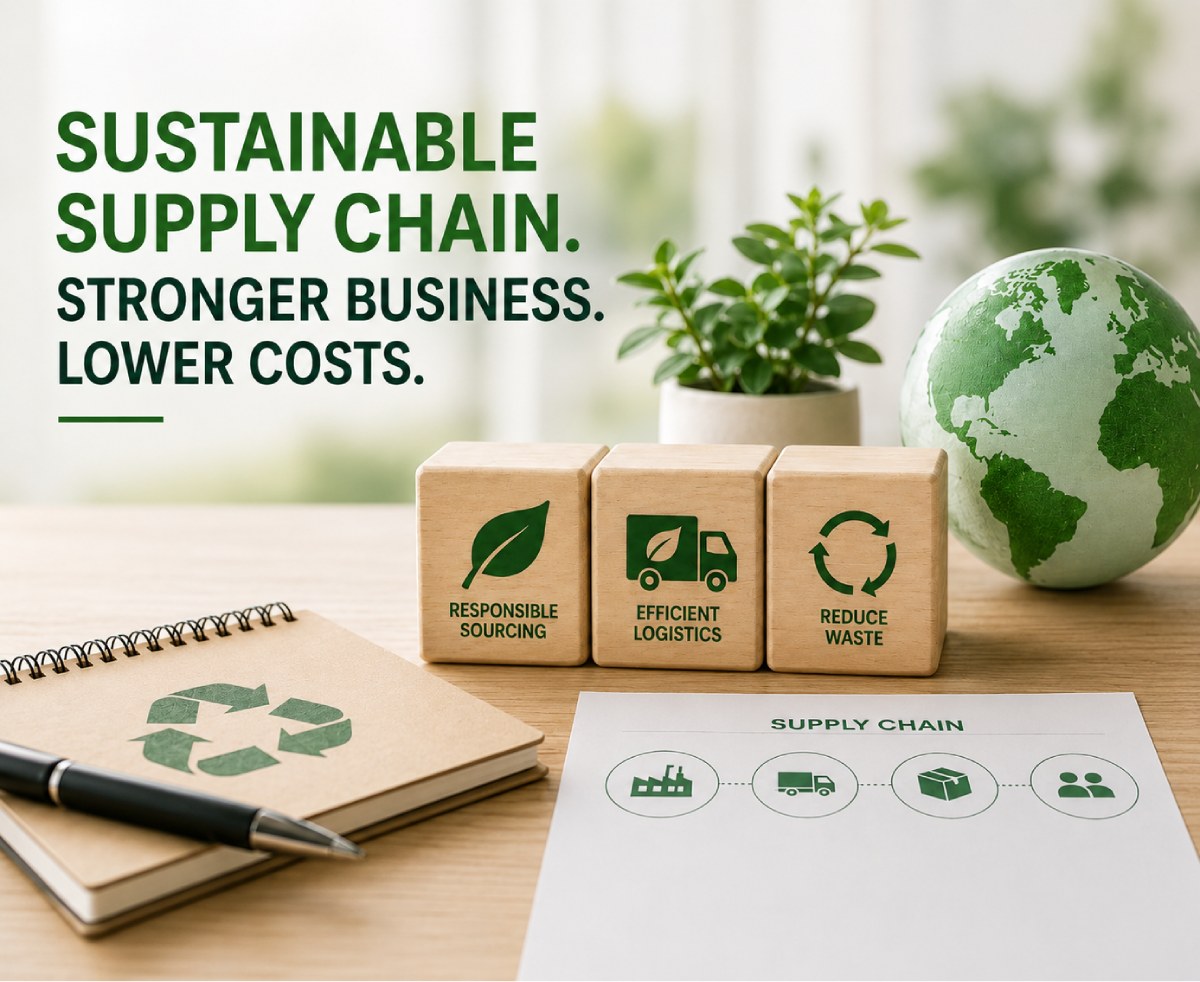
Many businesses assume that building a more sustainable supply chain automatically means increasing costs. While some sustainability initiatives may require investment, this perception often overlooks the fact that many sustainable practices are closely linked to efficiency, waste reduction, and improved resource management.
For small and medium-sized enterprises (SMEs), sustainability is increasingly becoming part of everyday business rather than a standalone environmental initiative. Customers, supply chain partners, investors, and procurement teams are paying closer attention to how products and services are sourced, delivered, and managed throughout the supply chain.
The good news is that improving sustainability does not always require significant spending. In many cases, businesses can strengthen supply chain sustainability while simultaneously improving operational efficiency and reducing unnecessary costs.
At Greenstat, we help organisations understand how sustainability can support long-term business performance. A practical and strategic approach to supply chain sustainability often reveals opportunities that benefit both the environment and the bottom line.
Why Supply Chain Sustainability Matters
Supply chains have a significant influence on a company's overall environmental impact.
For many businesses, the majority of emissions and resource use occur outside their direct operations, within the wider supply chain. This means suppliers, transportation, procurement decisions, and product sourcing all contribute to a company's sustainability performance. improved resource efficiency as key drivers of both sustainability and operational performance. more expensive suppliers. In reality, sustainable procurement often involves taking a broader view of value rather than focusing solely on purchase price. benefits for both organisations.
Research shows that supplier engagement and collaboration are important components of successful sustainable supply chain management. alongside improved environmental performance. challenges can all create operational risks. Building sustainability into the supply chain can help organisations become more resilient and better prepared for future challenges. supply chain improvements have been shown to support efficiency, reduce waste, strengthen resilience, and in many cases reduce operational costs.
